
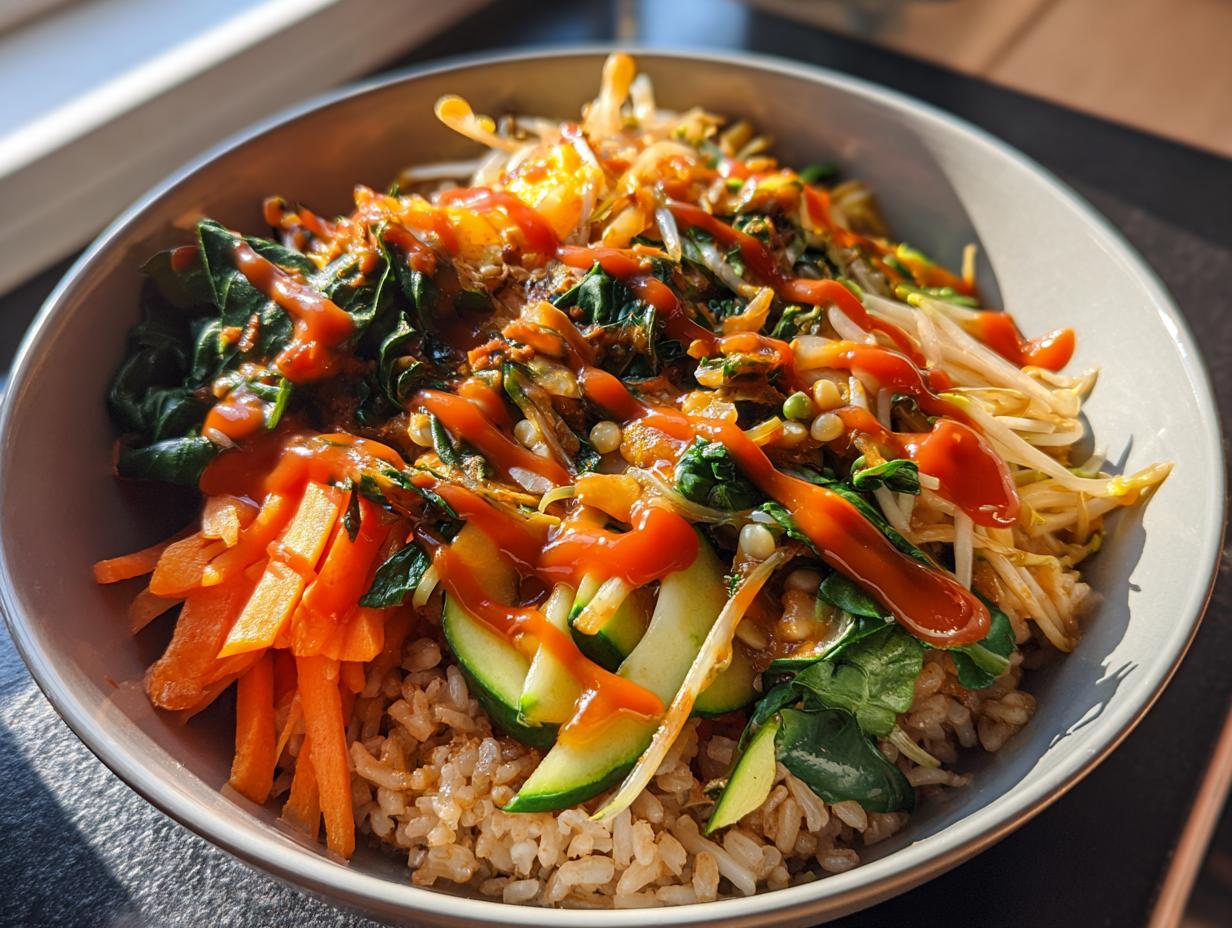
Let me tell you about my absolute favorite dish: Healthy Korean Bibimbap! This vibrant bowl of goodness is not just a feast for the eyes but also a treasure trove of nutrition. Picture it: a colorful array of fresh vegetables, perfectly cooked brown rice, and a spicy-sweet sauce that ties it all together. Trust me, every bite is a celebration of flavors and textures! I love how this dish is so customizable; you can toss in whatever veggies you have on hand, and it always turns out delicious. Plus, it’s packed with vitamins and fiber, making it a wholesome choice for lunch or dinner. It’s one of those meals that feels indulgent yet nourishing at the same time. Honestly, once you try this Healthy Korean Bibimbap, you’ll want to make it again and again! It’s simply irresistible!
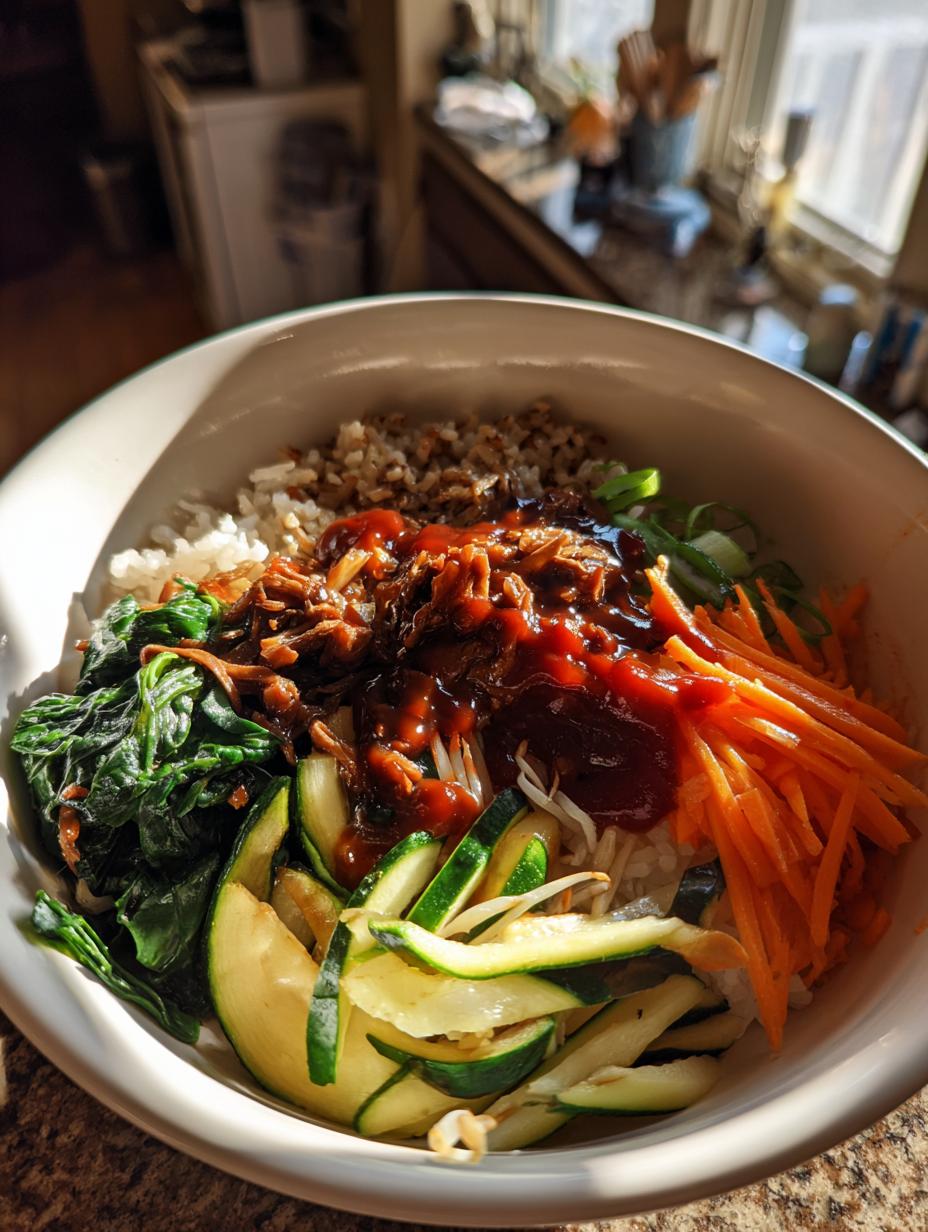
Ingredients List
Gathering the right ingredients is crucial for making the best Healthy Korean Bibimbap! Here’s what you’ll need:
- For the Rice:
- 1 cup uncooked brown rice
- For the Vegetables:
- 1 cup spinach, rinsed and roughly chopped
- 1 carrot, julienned (thinly sliced into matchstick shapes)
- 1 cup zucchini, sliced into thin rounds
- 1 cup bean sprouts, cleaned and trimmed
- For the Sauce:
- 2 tbsp gochujang (Korean chili paste)
- 1 tbsp sesame oil
These ingredients come together to create a dish that’s not only delicious but also bursting with color and nutrition. Make sure to prep your vegetables before starting—prepping ahead makes the cooking process a breeze!
How to Prepare Healthy Korean Bibimbap
Now that we’ve got our ingredients ready, let’s dive into the fun part—preparing this delightful Healthy Korean Bibimbap! It’s super straightforward, and I promise you’ll love the vibrant colors and amazing flavors that come together in just a few simple steps.
Cook the Rice
First things first, let’s get that brown rice cooking! Rinse 1 cup of uncooked brown rice under cold water to remove any excess starch. Then, pop it into your rice cooker with the appropriate amount of water (usually 2 cups, but check your rice cooker’s instructions). Set it to cook, and while that’s happening, you can focus on the veggies!
Sauté the Vegetables
In a frying pan over medium heat, add a splash of water or a drizzle of oil to make things lively. Start with the spinach; toss it in and sauté for about 2 minutes until it’s wilted and bright green. Next, add the julienned carrot and continue to cook for another 3-4 minutes until they’re tender but still have a bit of crunch. Finally, throw in the sliced zucchini and bean sprouts, cooking everything together for an additional 2-3 minutes. You want your veggies to be colorful and vibrant, not mushy—so keep an eye on them!
Make the Sauce
While the vegetables are sizzling away, grab a small bowl and mix together 2 tablespoons of gochujang and 1 tablespoon of sesame oil. Stir until smooth—that’s it! This sauce is the crown jewel of your bibimbap!
Assemble the Bibimbap
Once the rice is fluffy and cooked, it’s time to assemble your masterpiece! Divide the cooked brown rice into two bowls. Top each bowl generously with the sautéed vegetables you just made, arranging them beautifully for that restaurant-style presentation. Finally, drizzle your gochujang sauce over the top, and voilà! You’ve created a stunning Healthy Korean Bibimbap that’s ready to be devoured!
Nutritional Information
Now, let’s talk about the nutrition packed into this Healthy Korean Bibimbap! It’s not just delicious; it’s also a wholesome choice. Each serving contains approximately 400 calories, making it a satisfying meal without the guilt. You’ll get about 12 grams of protein, which is perfect for keeping you full and energized. The dish also boasts 70 grams of carbohydrates and 10 grams of fat, with only 1 gram of saturated fat—so it’s heart-healthy too! Plus, it’s loaded with fiber (about 8 grams), vitamins A and C, and essential minerals like calcium and iron. Remember, these values are estimates, but they highlight just how nutritious this vibrant dish can be!
Why You’ll Love This Recipe
- Quick Preparation: This Healthy Korean Bibimbap can be whipped up in under 40 minutes, making it perfect for busy weeknights!
- Nutrient-Rich: Packed with a variety of fresh vegetables, it’s a wholesome meal full of vitamins and minerals that nourish your body.
- Customizable: You can easily swap in your favorite vegetables or proteins, making this dish versatile for any palate.
- Vibrant Flavors: The delicious gochujang sauce adds a delightful kick, making each bite exciting and flavorful.
- Perfect for Meal Prep: This dish holds up well in the fridge, so it’s great for making ahead and enjoying throughout the week!
Tips for Success
To make your Healthy Korean Bibimbap truly shine, here are some pro tips! First, make sure to rinse your brown rice thoroughly before cooking; this helps remove excess starch and results in fluffier rice. When sautéing the vegetables, don’t overcrowd the pan—this allows them to cook evenly and retain their vibrant colors. If you want to amp up the flavor, consider adding a splash of soy sauce or a sprinkle of sesame seeds while cooking the veggies. And remember, feel free to adjust the spice level by adding more gochujang or even a dash of sriracha if you like it fiery! Lastly, don’t skip the presentation—arranging the veggies beautifully on the rice makes for a stunning dish that looks as good as it tastes!
Variations
The beauty of Healthy Korean Bibimbap lies in its versatility! You can easily customize it to suit your taste or to use up whatever you have in the fridge. For a protein boost, try adding some grilled chicken, tofu, or even marinated beef. If you’re in the mood for seafood, shrimp or fish would be delightful additions as well!
Feel free to mix in other colorful veggies like bell peppers, mushrooms, or radishes for extra crunch and flavor. You can also experiment with different sauces—soy sauce or teriyaki can bring a unique twist. And don’t forget to top it off with a fried egg or even a sprinkle of chopped nuts for added texture. The sky’s the limit!
Storage & Reheating Instructions
If you have any leftovers of this delicious Healthy Korean Bibimbap, storing them properly is key to preserving their flavor and freshness. Let the bibimbap cool down to room temperature before transferring it to an airtight container. It can be stored in the refrigerator for up to 3 days. When you’re ready to enjoy it again, simply reheat it in the microwave. I recommend adding a splash of water to the container and covering it with a damp paper towel to keep everything moist. Heat it in 30-second intervals, stirring in between, until it’s warmed through. Enjoy your leftovers without losing that vibrant flavor!
FAQ Section
Got questions about making the best Healthy Korean Bibimbap? I’ve got you covered! Here are some common inquiries:
- Can I substitute white rice for brown rice? Absolutely! While brown rice adds more fiber and nutrients, white rice can work if that’s what you have on hand. Just adjust the cooking time according to the package instructions.
- What if I don’t have gochujang? No worries! You can use sriracha or another chili paste, but keep in mind the flavor will be slightly different. You could also mix in some soy sauce for a different twist.
- Can I make this dish vegan? Yes! Just skip the fried egg topping, and you’ll have a delicious vegan Healthy Korean Bibimbap. You can also add tofu for extra protein!
- What vegetables can I use? Feel free to get creative! Bell peppers, mushrooms, or even kale can be great additions. The beauty of bibimbap is that it’s all about using what you love!
- How can I make this a meal prep option? This dish stores well in the fridge. Just separate the rice and toppings in airtight containers to keep everything fresh. Reheat and enjoy throughout the week!
For more delicious recipes and ideas, check out our Pinterest page!
Healthy Korean Bibimbap
Equipment
- Frying pan
- Rice Cooker
Ingredients
For the Rice
- 1 cup uncooked brown rice
For the Vegetables
- 1 cup spinach
- 1 carrot julienned
- 1 cup zucchini sliced
- 1 cup bean sprouts
For the Sauce
- 2 tbsp gochujang Korean chili paste
- 1 tbsp sesame oil
Instructions
- Cook the brown rice according to package instructions in a rice cooker.
- In a frying pan, sauté the spinach, carrot, zucchini, and bean sprouts until tender.
- In a small bowl, mix gochujang and sesame oil to make the sauce.
- Once the rice is cooked, divide it into bowls and top with sautéed vegetables.
- Drizzle the sauce over the top and serve.